
"café with sunlight"
200 article(s) found
Brief introduction of black honey-flavored coffee in Costa Rica
Following Cafe (official Wechat account vdailycom) found that the Beautiful Cafe opened a small shop of its own. In 1816, this small Central American country, Costa Rica, became the first country to have a thriving coffee industry. In 1832, the first batch of coffee exported to Britain arrived through Chile and was named after the Chilean port of Valparaiso. Between 1846 and 1890, coffee was Costa Rica.

A brief introduction to the western valley of Costa Rican Coffee Goddess Manor
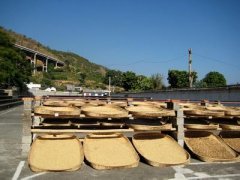
All the coffee trees planted in Costa Rica are Arabica coffee trees. through improvement, the quality of coffee beans is better and more stable. in order to facilitate picking, coffee trees are kept at a height of about 2 meters through continuous pruning. The coffee that people eat is the taste of the seeds in the fruit that are brewed in water. After picking raw coffee beans, the peel, pulp, seed film and sun exposure must be removed.

Hiding out in Little France in the trouble zone! Three lazy cafes for girlfriends
For the exchange of professional baristas, please follow the small world hidden in the attic in the coffee workshop (Wechat official account cafe_style). Girls usually like to get together to chat and gossip. At this time, a coffee shop with excellent atmosphere and food can add a lot of points to this beautiful afternoon. Although Taipei is a real concrete jungle, it is noisy everywhere on weekends.

Colombia Hacienda Mallorca Estate Features Flavor Taste Treatments Variety
Professional coffee knowledge exchange More coffee bean information Please pay attention to Coffee Workshop (Weixin Official Accounts cafe_style) Hacienda Mallorca Estate is operated and managed by Santiago Londoo. This estate is owned by his father and his uncle. Coffee has been grown since 1932. This estate is in Valle del Cauca.

Introduction to the characteristics of high-quality coffee beans in the producing area of Costa Rican Yerzaro coffee flavor varieties
Coffee was introduced into Costa Rica from Cuba in 1729. Today, its coffee industry is one of the well-organized industries in the world, with a yield of 1700 kg per hectare. Costa Rica has only 3.5 million people but 400m coffee trees, and coffee exports account for 25 per cent of the country's total exports. The volcanic soil of Costa Rica is very fertile and well drained, especially in the central part.

Seize this summer! 2017 must go to 5 seaside Cafe before autumn.
Exchange of professional baristas Please follow the coffee workshop (Wechat official account cafe_style) the summer vacation is half over in the twinkling of an eye, everyone should still be busy playing around, have you not started to pack up the mood and go back to school at all? If you have a chance to go to Korea before autumn, remember not to miss the following seaside Cafe, look at the blue sea and enjoy the leisurely sea breeze sweeping your cheeks. 1 、 Bossano

Costa Rican coffee Costa Rica Rivas people processing factory treasure manor introduction.
Professional coffee knowledge exchange more coffee bean information please follow the coffee workshop (Wechat official account cafe_style) Mr. Rgulo Gerardo Urea Chacn family, began to grow coffee 26 years ago, the area La Guaca refers to the local aborigines buried a treasure, but so far has not been found, so named treasure manor (La Guaca) is of deep historical and cultural significance

The agroforestry model of growing coffee provides a sustainable development choice for Bathia Mason farmers.
For more information on coffee beans, please follow Coffee Workshop (official Wechat account cafe_style) in Apu, Amazon, Brazil, farmers are turning to a new coffee planting model, agroforestry, in a coffee-growing area that has almost been abandoned. They found that such a planting model can not only generate income, but also maintain the original appearance of the forest. Apu bit

Introduction to the treatment method of Grinding degree of Coffee Flavor description in Fenghuang Manor, Costa Rica
Costa Rica is located in the Central American isthmus, belonging to North America, 10 north latitude, 84 west longitude. It is bordered by the Caribbean Sea to the east and the North Pacific Ocean to the west, with a coastline of 1290 km (212km on the east coast and 1016 km on the west coast). Costa Rica borders Nicaragua in the north (309 km long border) and Panama (639 km long border) south-southeast. Total

The unique strong flavor of Costa Rican coffee introduces the Costa Rican coffee producing area.
All the coffee trees planted in Costa Rica are Arabica coffee trees. through improvement, the quality of coffee beans is better and more stable. in order to facilitate picking, coffee trees are kept at a height of about 2 meters through continuous pruning. The coffee that people eat is the taste of the seeds in the fruit that are brewed in water. After picking raw coffee beans, the peel, pulp, seed film and sun exposure must be removed.

Introduction to Coffee Manor | Hope Manor with the same name in 7 countries around the world
Professional barista communication Please follow the coffee workshop (Wechat official account cafe_style) walk into the boutique coffee shop, when looking at the small blackboard of individual coffee, a string of text, the author's previous habits, tend to look at the first paragraph or the end. For example, ETHIOPIA YIRGACHEFFE MISTY VALLEY NATURAL, the easiest way to start is to look at the ETHIOPIA YIRGACHEFFE.
Balanced and clean Costa Rican Yerzaro boutique coffee beans grind degree baking degree treatment method
Costa Rica's coffee industry, originally controlled by the Costa Rican Coffee Industry Company (InstitutodelCafdeCostaRica, ICAFE), has been taken over by the official Coffee Committee (OficinadelCaf). Among the exported coffee, those products that are considered to be of substandard quality are colored with blue vegetable dyes and then transferred back to China for sale. Coffee consumed at home

Introduction to the unique and strong flavor and taste characteristics of Costa Rican coffee manor
Coffee was introduced into Costa Rica from Cuba in 1729. Today, its coffee industry is one of the well-organized industries in the world, with a yield of 1700 kg per hectare. Costa Rica has only 3.5 million people but 400m coffee trees, and coffee exports account for 25 per cent of the country's total exports. The volcanic soil of Costa Rica is very fertile and well drained, especially in the central part.

Scientific Research and cultivation of Costa Rican Coffee
The research center, located about 30 kilometers northeast of San Jose, the capital of Costa Rica, belongs to the Costa Rican Coffee Association and is the research institution for planting, breeding and quality inspection of Brazilian coffee fruits in Costa rica. in addition, it also has 10 hectares of experimental plots, planting a number of excellent varieties. Coffee is the main agricultural product of Costa Rica.

The mild taste of Costa Rica Yerzaro boutique coffee beans cultivation geographical location climate sea
Tarrazu in Costa Rica is one of the major coffee producing areas in the world. The coffee produced is light and pure in flavor and pleasant in aroma. The research center, located about 30 kilometers northeast of San Jose, the capital of Costa Rica, belongs to the Costa Rican Coffee Association and is a research institution for villa sarchi planting, breeding and quality inspection newly developed in Costa Rica.

The strong scented Costa Rican Yerzaro boutique coffee bean cultivation situation, geographical location, climate sea
There are many kinds of coffee here, but its industrial policy is large and cheap, so there is not much premium coffee, but it is a good choice for mixing other coffees. The newly developed villa sarchi planting, breeding and quality inspection research institutions, in addition, it also has 10 hectares of experimental plots, planting a number of excellent varieties. Coffee is the main agricultural product in Costa Rica, with an annual output of more than 2 million.

A brief introduction to the planting market price of Costa Rican Yerzaro boutique coffee beans with mild taste
Tarrazu in Costa Rica is one of the major coffee producing areas in the world. The coffee produced is light and pure in flavor and pleasant in aroma. The research center, located about 30 kilometers northeast of San Jose, the capital of Costa Rica, belongs to the Costa Rican Coffee Association and is a research institution for villa sarchi planting, breeding and quality inspection newly developed in Costa Rica.

Introduction to the price of Kilimanjaro coffee beans and the price of Kilimanjaro coffee beans
Following Cafe Review (official Wechat account vdailycom) found that Beautiful Cafe opened a small shop of its own Kilimanjaro: rich aroma, strong glycol, unique cocoa, soft acidity, mellow earthy taste. Kilimanjaro coffee beans (Kilimanjaro Coffee Beans) are bright in color, lively, mellow and have a long aftertaste. Coffee beans come from soil fertilizer

Scientific Research and cultivation of Coffee beans in Costa Rica
The research center, located about 30 kilometers northeast of San Jose, the capital of Costa Rica, belongs to the Costa Rican Coffee Association and is the research institution for planting, breeding and quality inspection of Brazilian coffee fruits in Costa rica. in addition, it also has 10 hectares of experimental plots, planting a number of excellent varieties. Coffee is the main agricultural product in Costa Rica, with an annual output of more than 2 million bags

A brief introduction to the History and Culture of the Origin and Development of Costa Rican Yerzaro Fine Coffee beans
The newly developed villa sarchi planting, breeding and quality inspection research institutions, in addition, it also has 10 hectares of experimental plots, planting a number of excellent varieties. Coffee is Costa Rica's main agricultural product, with an annual output of more than 2 million bags (60 kilograms) and foreign exchange earnings of 250 million US dollars, second only to pineapples and bananas. All the coffee trees planted in Costa Rica are Arabica coffee trees.